
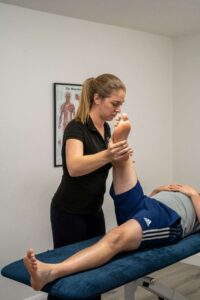
Here at Revive Physiotherapy and Sports Injury clinic we treat a variety of hip pain injuries and conditions including:
Hip Flexor Tendonitis:
When muscles are overused they can pull on the tendons which attach them to the bone. This in turn leads to irritation and inflamed hips. People with Hip Flexor Tendonitis experience hip pain, mild swelling and hip tenderness near the joint. If left untreated, hip flexor tendonitis will worsen, leading to reduced or loss of hip movement.
Hip Bursitis:
Symptoms of Hip Bursitis include joint pain and tenderness, you may feel warmth around the affected area and see some swelling also. The pain can be sharp for the first few days, achy and dull afterward. Hip Bursitis can be acute (short lived) or chronic (long term), it can lead to atrophy of the muscles if not treated appropriately.
Hip Impingement(FAI):
This occurs when the ball of the hip pinches the cup of the hip, causing damage to the cartilage. The result is stiffness and pain, and can also lead to arthritis. Some of the symptoms of Hip Impingement include a dull, aching pain which worsens with movement and exercise. A popping or clicking sound or sensation can also sometimes be present around the hip joint. Hip Impingements will not heal on their own, and left untreated can lead to osteoarthritis.
Gluteal Tendonitis:
Quite a common hip condition, Gluteal Tendonitis is as a result of tiny tears in the tendons, often due to regular wear and tear. It causes a weakness or pain in the buttocks and side of the hip. Gluteal Tendonitis can also present as pain that gets worse with movement, such as running, jumping or walking. The pain and stiffness can be worse in the morning and last thing at night.
Groin strain:
Groin strain, also known as a groin pull, occurs when one of the muscles gets pulled, torn or injured. This injury can be mild, moderate or severe, all can be treated and should not cause any long term damage.
Piriformis Syndrome:
When the piriformis muscle compresses the sciatic nerve it results in pain and inflammation. This pain is commonly focused in the buttocks and down the back of the leg. Piriformis Syndrome can often feel like sciatica pain, however it is affected in a more specific area, and needs to be treated differently to sciatica. Symptoms can include aching, tingling, burning or shooting pain, and these symptoms can get worse when sitting for long periods of time, or when climbing stairs, running or walking.
Hip Replacement:
A total hip replacement is a procedure that removes damaged bone and cartilage, and replaces it with prosthetic components. Physiotherapy is essential after a hip replacement and it can be started as early as a week post surgery, your surgeon will advise you on when to start. the amount of physiotherapy needed will vary depending on the individual person. Physiotherapy starts slow, and builds up weekly to get you back on your feet as soon as is possible.
For more information on any of these injuries or conditions, call us here or you can book online to make an appointment.